
Inside the Internship: Trevor Shares His Experience
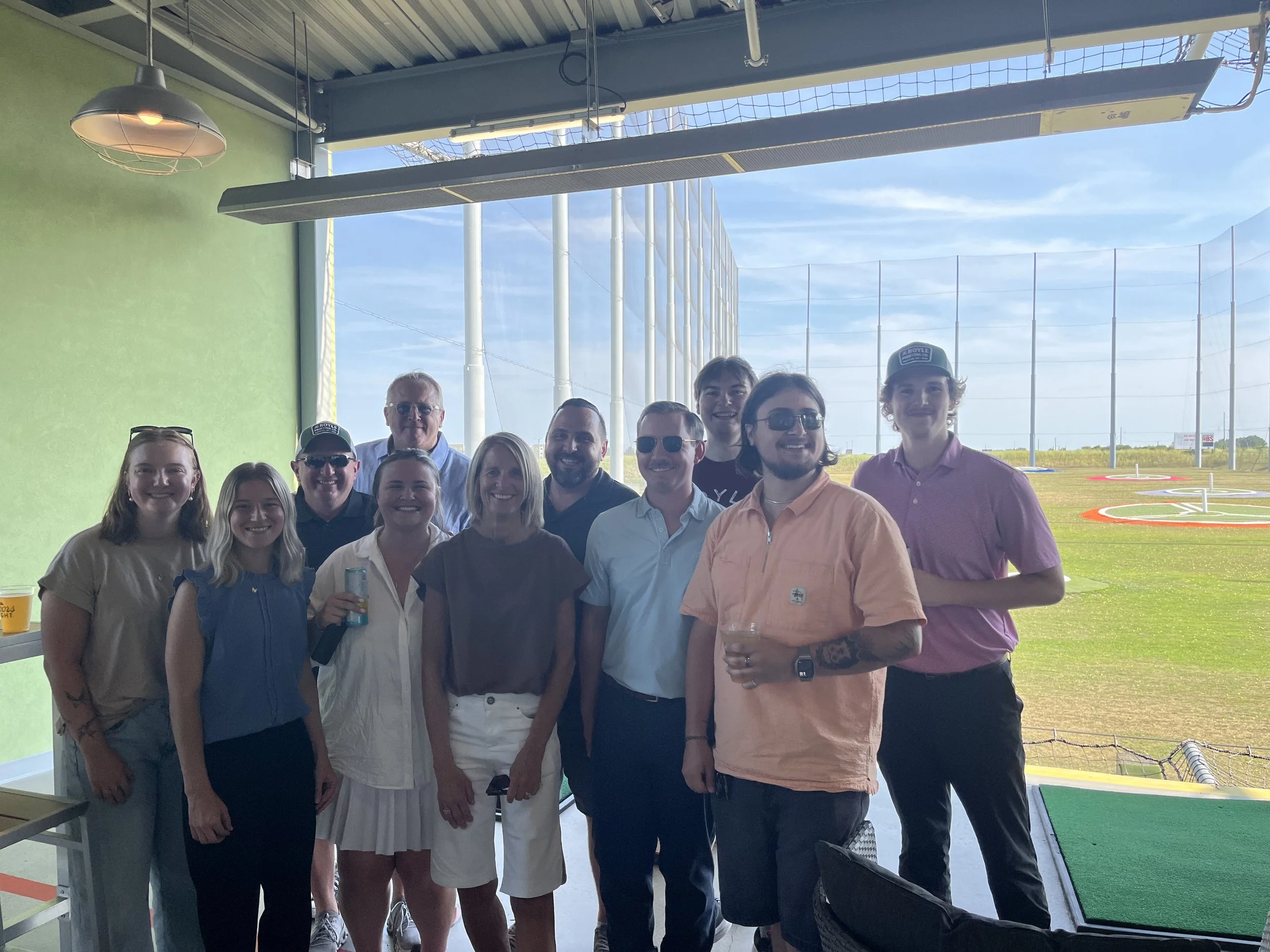
Intern Outing at PinSocial!
What is your name, age, school year, what school you go to, major, etc.?
My name is Trevor Anderson, and I am 24 years old. I am currently a senior at the University of Wisconsin–Stout, where I am pursuing a degree in Graphic Communications. Before attending UW-Stout, I earned an associate degree in Digital Marketing from Chippewa Valley Technical College. My current program has allowed me to build on that marketing background by learning more about print production, design, technology, and the physical side of visual communication.
Why Royle? What is it that you hope to get out of this internship?
I chose Royle because of the company’s welcoming, family-oriented atmosphere. I met several Royle employees at the UW-Stout Career Conference, and their enthusiasm for the company and the printing industry was contagious! I was also drawn to the opportunity to work with magazines, catalogs, and other high-quality printed pieces, especially projects for recognizable lifestyle and retail brands such as Artful Living and Free People. I enjoy publications that combine strong photography, thoughtful design, and high-quality production, so seeing how those pieces are created from beginning to end was especially appealing to me. Through this internship, I hope to strengthen my understanding of print production and learn how each department contributes to the final product. I also want to build relationships, experience living and working in a different part of Wisconsin and gain the knowledge and professional experience needed to begin a successful career after graduation.
What made you choose the Graphic Communications program at UW-Stout over other fields of study?
I chose Graphic Communications because I enjoy the hands-on nature of the field and the combination of creative and technical work. The printing industry brings together design, technology, manufacturing, problem-solving, and communication, which gives people many different ways to apply their skills. The passionate and welcoming people I have met throughout the industry also played an important role in my decision. Many of the professionals I have spoken with are excited to share what they know and encourage younger people to explore print as a career.
The program was also a natural way to build on my associate degree in Digital Marketing. My marketing education taught me how brands communicate with audiences through digital platforms, while Graphic Communications has helped me understand the physical side of marketing. I have learned how files are prepared for production, how design decisions affect printing, and what it takes to transform an idea on a screen into a finished product. I have also always been interested in analog media, including magazines, vinyl records, posters, books, physical games, and other forms of media that existed before everything became digital. There is something rewarding about seeing artwork become a real, tangible object that people can hold, display, collect, and keep.
Why do you think print still matters in today’s digital world?
Print still matters because it is everywhere, even when people do not immediately recognize it. It appears on the packaging around food and consumer products, the billboards people pass during their commutes, the graphics used throughout the clothing industry, the banners and signage displayed at events, the mail delivered to homes, and the magazines and catalogs people encounter in waiting rooms, stores, and offices. Print also provides an experience that digital media cannot completely replace. A printed piece has texture, weight, color, finishing, and physical presence. It does not require a battery, internet connection, or screen. People can hold it, interact with it, display it, and return to it later.
I believe print and digital media can coexist rather than compete. Digital technology has improved communication and made certain types of printed materials less necessary. At the same time, there are many situations where print remains essential or creates a stronger and more memorable experience. I am especially interested in the movement toward high-quality and luxury printing. Specialty finishes, unique papers, thoughtful binding methods, and strong design can turn a printed piece into something that people want to keep permanently on a shelf or coffee table. As digital communication becomes faster and more temporary, well-made print has the opportunity to feel even more meaningful.
What advice would you give to someone just starting to explore print as a career path?
I would encourage them to explore as many areas of the industry as possible. There are opportunities for people who enjoy art, design, technology, numbers, machinery, management, customer service, sales, paper, finishing, estimating, planning, and many other specialties. The routes someone can take within print are nearly endless, and many of the careers are not widely discussed outside the industry. I would also tell them not to assume that printing is outdated. Modern print facilities use automation, robotics, advanced software, data, and highly specialized equipment. At the same time, the industry still depends on human creativity, craftsmanship, communication, and problem-solving. As artificial intelligence and mass-produced digital content become more common, I believe people will place even more value on work that feels real, intentional, and carefully made. Print provides a tangible showcase of human creativity. The more people are surrounded by fast and temporary content, the more meaningful a thoughtfully designed and well-produced physical piece can become.
Can you tell us about the academic program you are in?
I am enrolled in the Graphic Communications program at UW-Stout. The program gives students experience in many areas of the printing industry, including color management, paper, binding and finishing, print production, estimating, planning, client communication, and the Adobe Creative Suite. I also work in UW-Stout’s Graphic Communications laboratory, where I assist students with projects for their GCOM courses. The lab gives students access to equipment and processes such as laser cutting, guillotine cutting, digital printing, two-color offset printing, perfect binding, die cutting, spiral and Wire-O binding, folding, wide-format printing, and vinyl cutting. Working in the lab has helped me strengthen my technical skills while also learning how to explain processes and help others troubleshoot their projects.
Outside the classroom, I have been involved with the Stout Typographical Society (STS). The organization has existed for more than 100 years and was recently restarted. Through STS, students produce merchandise and printed materials for organizations across the UW-Stout campus. I also participated in TAGA, the Technical Association of the Graphic Arts. Our team developed a collection of publications, packaging, stickers, shirts, and other materials for a student competition and showcase, where our work received the student choice award. Experiences like TAGA allow us to combine design, printing, finishing, teamwork, and project management into one large project.
Our program also provides opportunities to connect with the wider industry. We attended PRINTING United Expo last year and are planning to attend the event in Las Vegas this year. These experiences allow us to see new technology, speak with industry professionals, and better understand where the printing industry is heading.
What do you hope to contribute to the future of the print industry?
I hope to contribute my creativity, positivity, curiosity, and passion for print to the industry. I want to help develop new ideas and solutions that make printed communication more engaging, relevant, and valuable. I also hope to show younger generations how exciting physical and analog media can be. Many people my age have grown up in a primarily digital world and may not realize how much creativity, technology, and craftsmanship go into producing a printed piece. I want to help bridge the gap between print and digital marketing by showing how the two can work together rather than replace one another.
Ultimately, I hope to support the continued evolution of the printing industry and help create a future where new technology is embraced while physical media continues to have an important place in how people communicate, learn, collect, and experience art.